6 Types of Livestock Farms: Herd Management Guide for Dairy, Fattening & Breeding Operations
Learn how dairy, fattening, breeding, and integrated livestock farms differ — and how herd management software helps each type stay profitable.
6 Types of Livestock Farms, Business Models and How to Manage Each One
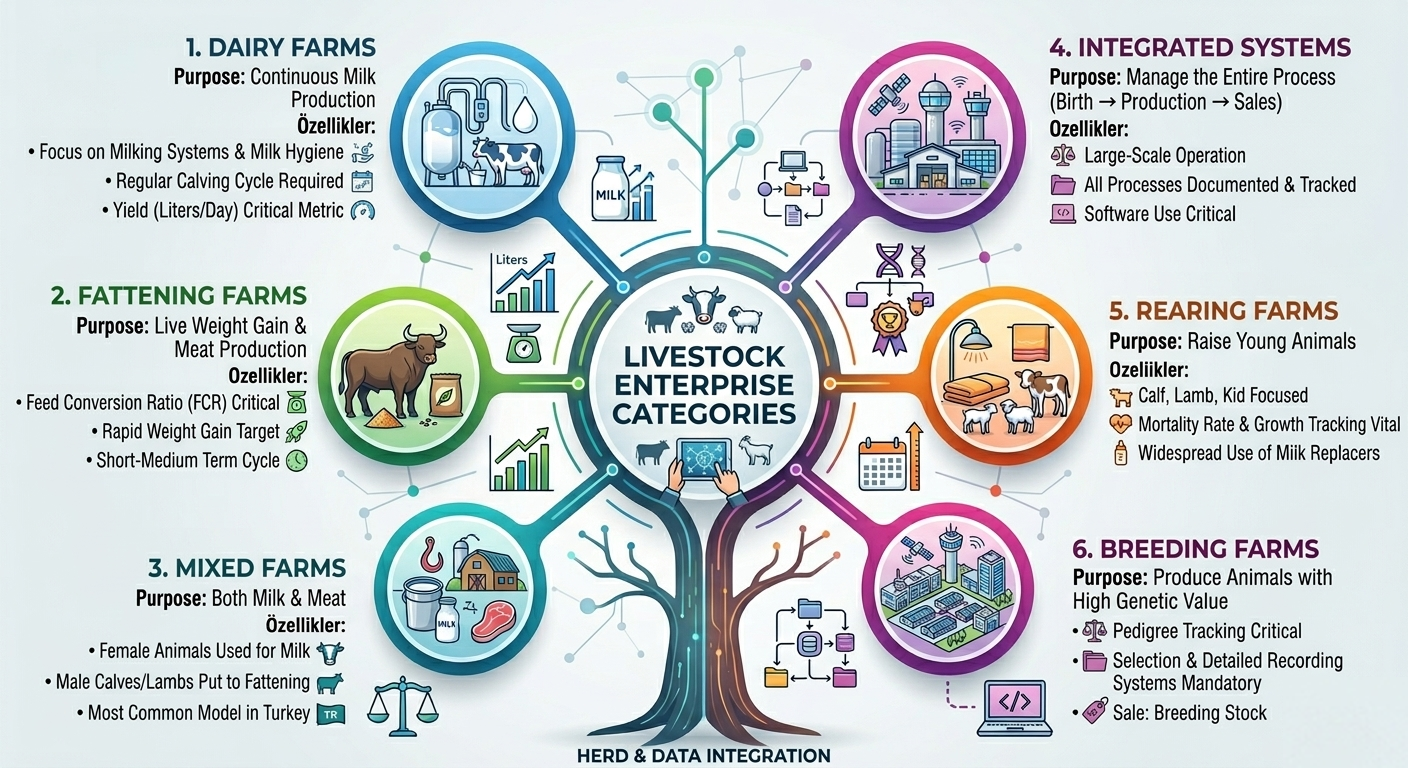
Tracking the herd provides distinct advantages contingent upon the nature and category of the business. Fundamentally, enterprises can be classified into two primary categories, and further subdivided into six categories based on practical field applications.
Whether you're running a dairy operation, a fattening enterprise, or a large integrated farm, the way you manage your herd defines your profitability. Understanding the different types of livestock farms — and the specific management challenges each one faces — is the first step toward smarter, data-driven farming.
This guide covers the six main livestock farm types, what makes each one unique, and how modern herd management software like roswise® helps farmers stay in control.
1. Dairy Farms
Purpose: Consistent milk production throughout the entire year.
Dairy farms are built around one goal: producing a reliable, continuous supply of milk — ideally 365 days a year. Achieving this requires careful herd planning aligned with your farm's capacity and labor force. Without structured herd tracking, it becomes nearly impossible to maintain a stable production cycle.
With proper herd management in place, you can answer critical questions at any given time:
How many animals are currently in milk?
How many cows or ewes are due for mating or insemination?
Which animals need vaccinations — and when?
How much labor is needed during the calving or lambing season?
What is the expected return on production this month?
Key metrics: Milk yield (liters/day), calving/lambing interval, dry-off timing
Management priority: Continuous birth planning, health monitoring, and real-time yield tracking. roswise® herd management software lets you carry all of this data in your pocket and make decisions based on live farm data — not guesswork.
2. Fattening Farms
Purpose: Maximizing live weight gain for meat production.
In fattening enterprises — whether intensive or extensive, small or large ruminant — the core metric is live weight gain. Regular weighing and feed efficiency tracking are essential to monitor progress and optimize rations.
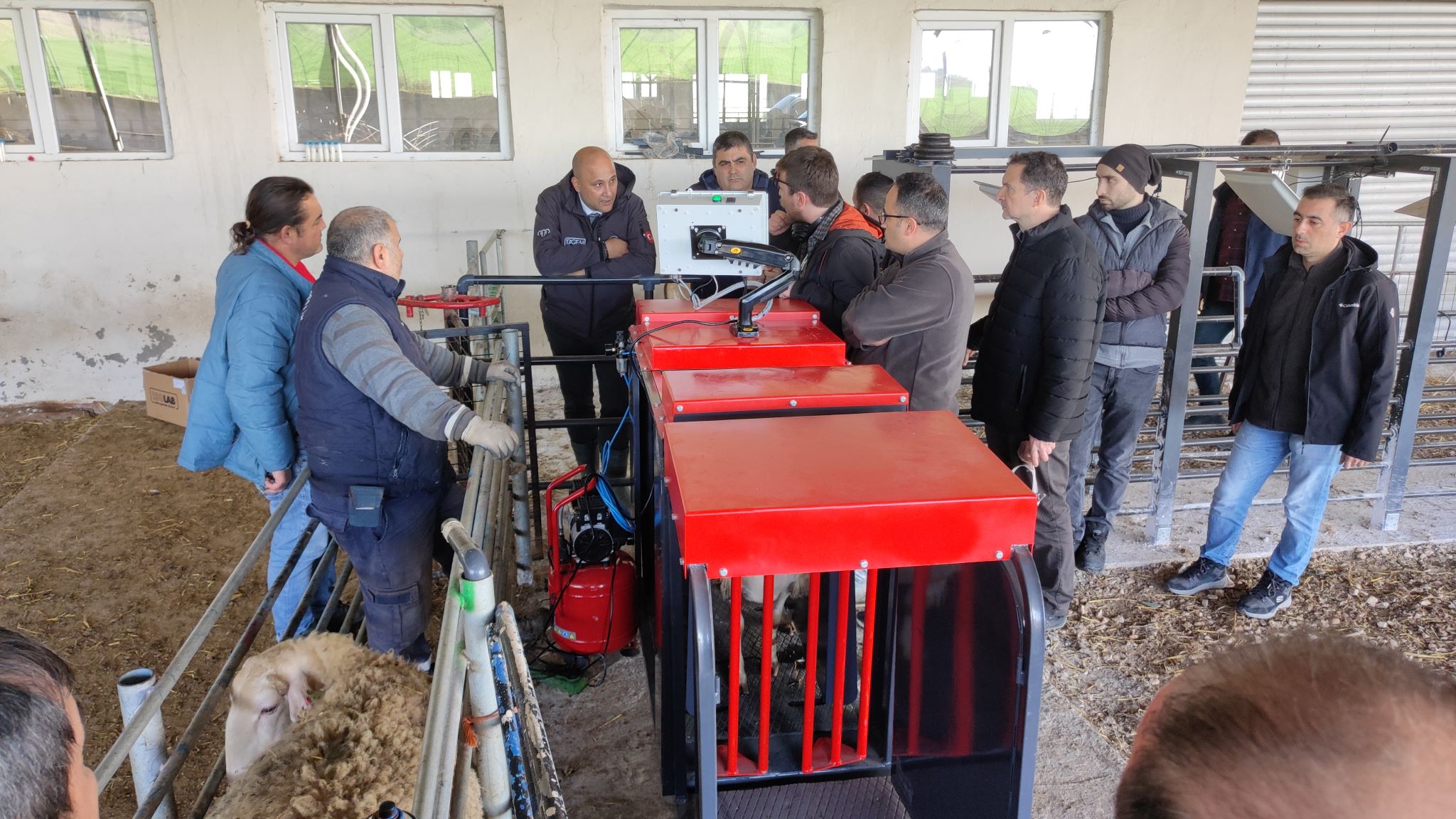
Manual weighing is time-consuming and prone to error. The roswise® Scaleep Pro automates this process entirely: it weighs animals, records the data, and syncs it directly to the roswise® cloud platform. You can analyze live weight trends and compare performance across batches without leaving your desk.
Typical production cycles:
Small ruminants (sheep/goats): 4–6 months
Large ruminants (cattle): 15–24 months
Key metrics: Feed Conversion Ratio (FCR), average daily gain (ADG), cost per kg of live weight
Management priority: Frequent weight monitoring, feed efficiency analysis, and timely sale decisions based on real data.
3. Mixed Farms
Purpose: Combining milk production and meat fattening in a single operation.
Mixed farms use female animals for milk and route male offspring into fattening. On paper, this model maximizes the value of every animal born on the farm. In practice, it is one of the most management-intensive models to run effectively.
The key to making a mixed farm profitable lies in herd data:
Female offspring should be evaluated using their mother's milk yield, disease history, and lifetime records — then selected for the milking herd or sold as breeding stock based on objective criteria.
High-quality breeding females identified through herd management software can be sold to other enterprises at a significant premium.
Male calves or lambs are directed into fattening with tracked growth targets.
Management priority: Integrated record-keeping across both production streams. A minimum of 5 years of consistent data collection is typically needed before a herd develops a reliable production baseline within an enterprise.
4. Breeding Farms
Purpose: Producing animals with high genetic value.
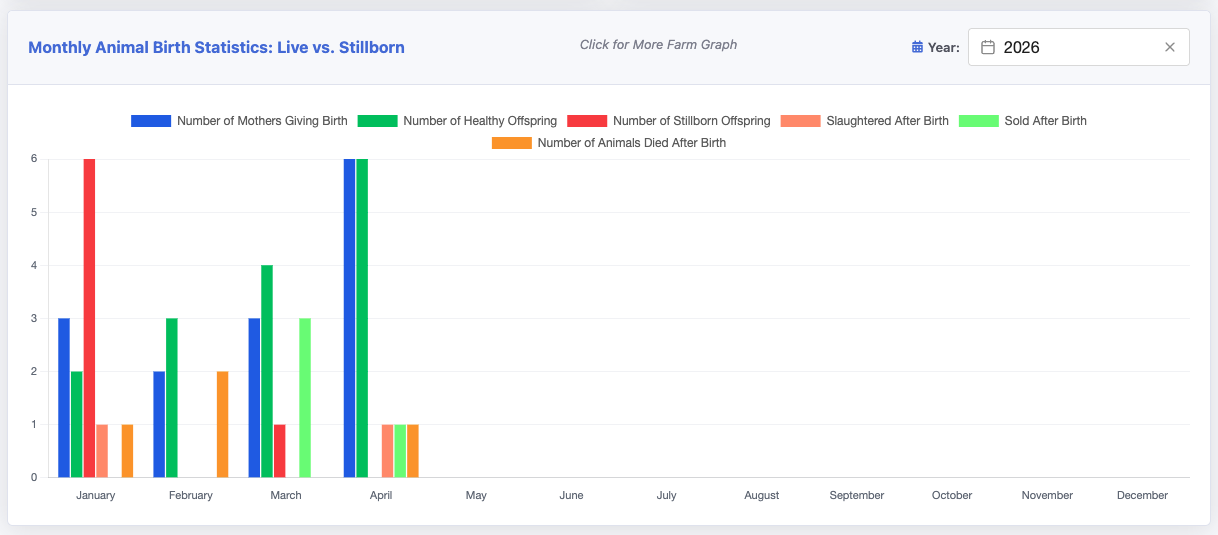
Breeding farms are among the most data-intensive operations in livestock agriculture. Government institutions, research centers, and private breeders all rely on detailed pedigree records, performance data, and scientific analysis to identify and develop genetically superior animals.
For private breeding enterprises, presenting transparent, digitally recorded animal histories to buyers is both a quality signal and a commercial advantage. Customers pay a premium for animals with verified backgrounds.
What needs to be tracked:
Full pedigree and parentage records
Complete vaccination, disease, and treatment history
Performance data: FCR for meat breeds, milk yield for dairy breeds
Selection outcomes and breeding program results
Key fact: In a well-managed, selectively bred herd, up to 28% of offspring may carry breeding-quality traits — but only if proper selection criteria and records are in place.
Management priority: Comprehensive, auditable digital records that can be shared with buyers and research partners.
5. Rearing Farms
Purpose: Raising weaned or young animals from multiple sources to sale weight or age.
Rearing farms present a unique challenge: they bring together animals from different farms, different health backgrounds, and often unknown pedigrees. When animals with different disease exposures are mixed, the risk of cross-infection is significant.
Robust herd tracking is non-negotiable in these operations. Key questions that must be answered for every animal entering the farm:
Where did this animal come from, and at what age did it arrive?
What is its health and vaccination status?
What is its current weight, and is it on track for its target sale weight?
What is the mortality rate per intake batch?
Tracking live weight gains continuously allows you to identify animals ready for sale without unnecessary holding costs — improving both cash flow and farm efficiency.
Key metrics: Mortality rate per batch, daily weight gain, profitability per animal
Management priority: Intake records, health monitoring, and weight-based sale decisions.
6. Integrated (Closed-Cycle) Farms
Purpose: Managing the full production cycle — from birth through to sale — within a single operation.
Integrated farms, sometimes called closed livestock systems, handle every stage of production internally. They can range from small family operations to large-scale commercial enterprises, and the management complexity scales accordingly.
Space requirements:
Large ruminants: 2.5–4 m² per cow
Small ruminants: 1.5–2.5 m² per sheep or goat
Larger integrated operations benefit from structural advantages — shift-based labor, equipment redundancy, and economies of scale that smaller farms can't access. But these advantages only translate into profitability if every process is properly recorded and managed.
Management priority: Full digital traceability of every animal from birth to sale. At this scale, roswise® herd management software becomes the central operating system for the entire farm — tracking animal presence, health history, production records, and movement across paddocks and facilities.
Extensive vs. Intensive: A Different Axis of Comparison
Beyond the six farm types above, livestock enterprises can also be categorized by their rearing system:
Extensive (pasture-based) farms benefit from very low feed costs. However, herd control is difficult — animals are harder to monitor, treat, and track consistently.
Intensive (closed) farms allow day-by-day and month-by-month planning. Production can be shaped in response to market conditions. Feed, health, and reproduction are all easier to manage systematically. The trade-off is higher infrastructure cost, but the data advantage more than compensates.
Regardless of which system you operate, the management challenge is the same: can you actually answer questions about your herd?
The Real Question: Do You Know Your Herd?
Many farms have hundreds of animals — but no real visibility into what those animals are doing for the business.
Which animals are your most productive?
Which ones are costing you more than they're earning?
Which are ready for sale, and which should stay in the herd?
Without clear answers to these questions, you're managing by intuition rather than data. That's a significant risk in any livestock operation.
What Proper Herd Management Looks Like
Individual animal records — Every animal has a unique digital identity: its number, location (paddock), current status, and full history.
Pedigree and health history — Birth information, parent records, vaccination schedules, and treatment history are all stored and searchable.
Profitability analysis — Know exactly which animals are generating returns and which are generating costs.
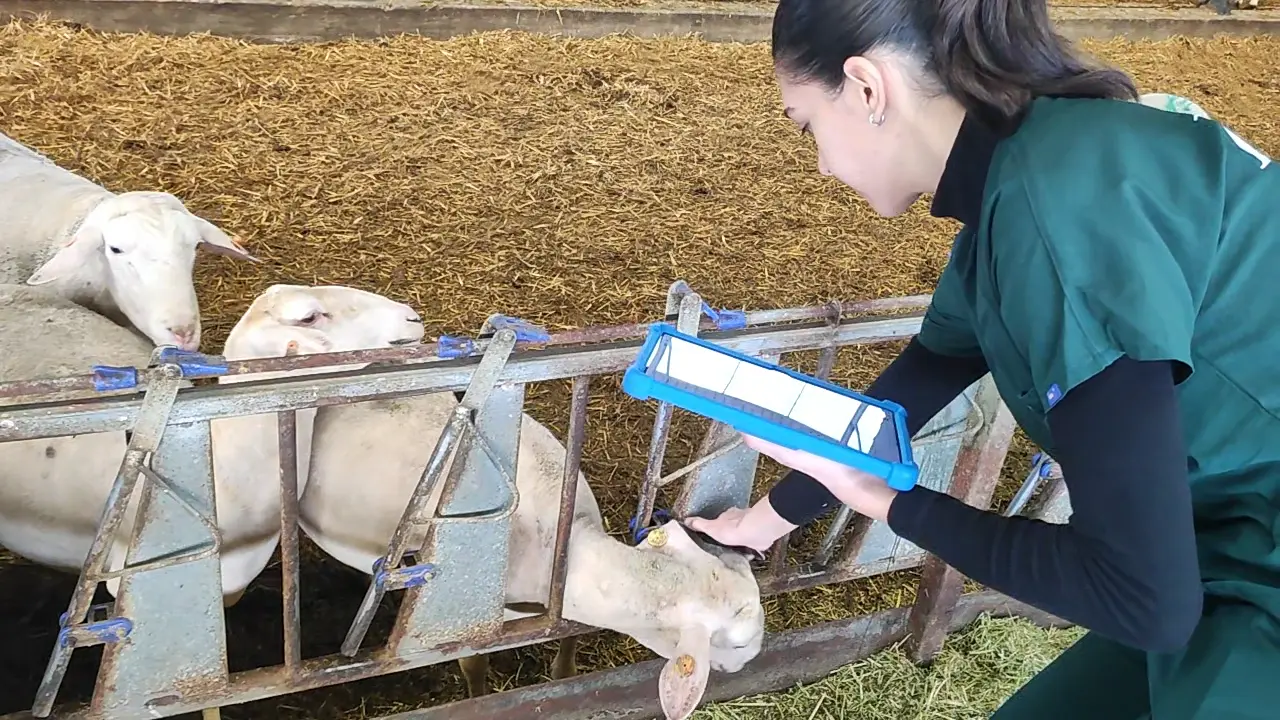
Time savings with RFID — Scan an animal, record its weight, and save the data in seconds. Tasks that used to take minutes of manual entry are eliminated entirely.
Live reporting on any device — Access real-time herd data from your phone, tablet, or desktop — on the farm or off it.
Conclusion: Herd Tracking is the Foundation of Every Farm Type
Whether you run a dairy farm, a fattening operation, a breeding enterprise, or an integrated system, the path to consistent profitability runs through one thing: knowing your herd.
Manual records are error-prone, hard to analyze, and easy to lose. Modern herd management software like roswise® gives every animal a digital identity and every farm owner a clear, data-driven view of their operation.
Planned production + accurate data + effective herd management = a livestock business that grows.
Ready to take control of your herd? Start your free 14-day trial of roswise® — no credit card required.
roswise® offers dedicated herd management software for sheep and goat farms (ovinia) and cattle and dairy operations (bovix). Both platforms include RFID tracking, health monitoring, breeding records, and production analytics — accessible from any device, anywhere.