Herd Management Software for Livestock: A Complete Guide for Cattle and Small Ruminants
Herd Management Software for Livestock: A Complete Guide for Cattle and Small Ruminants
What Is Herd Management Software and Why Does It Matter?
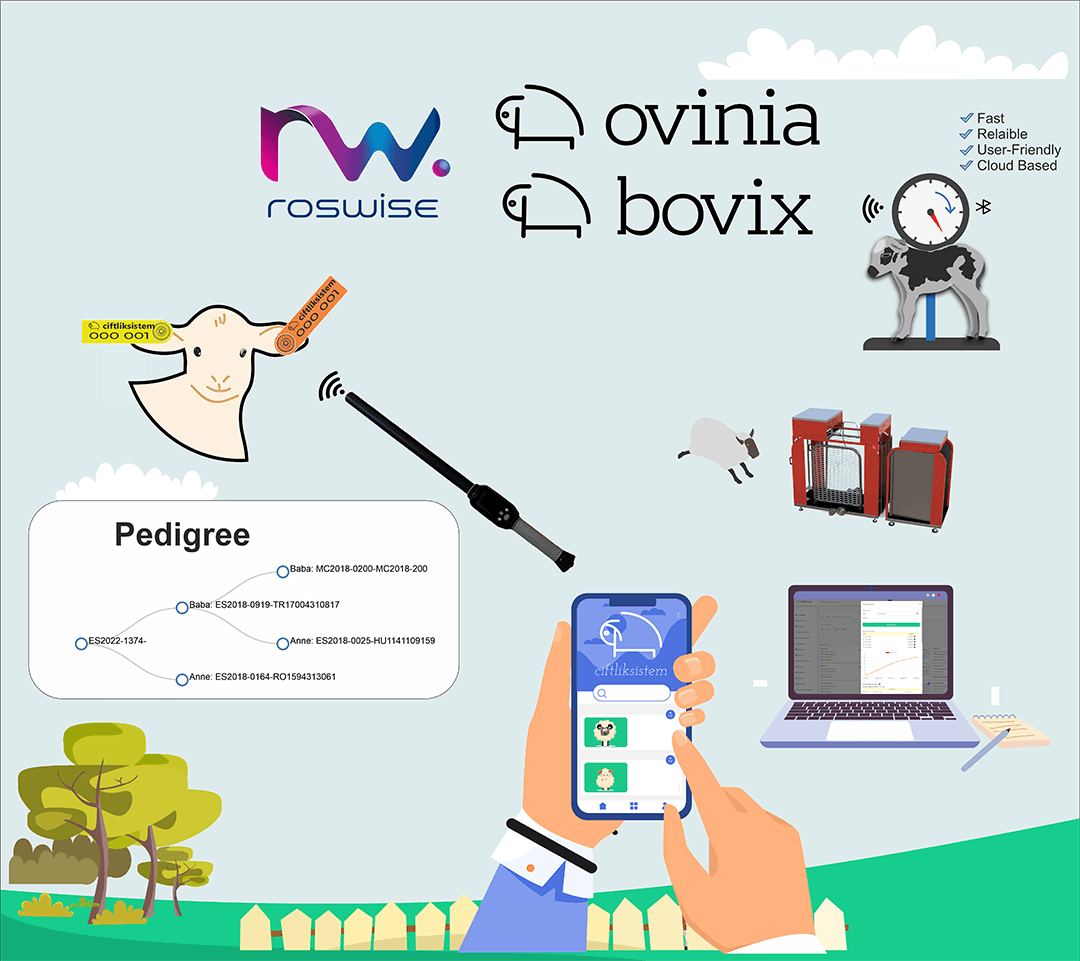
In modern livestock operations, tracking every animal individually is a fundamental requirement for profitability. The digital infrastructure built on the RFID Ear Tag → Handheld Reader → Phone/Tablet → Herd Management Software / Cloud chain makes data collection fast, accurate, and relational across both cattle and small ruminant herds.
Animals that have missed one or more breeding cycles — commonly referred to as "open" animals — silently erode profitability when left undetected:
- Fewer calves or lambs are born each year
- In dairy operations, non-productive females continue consuming resources without generating income
- Feed costs, labor, and pen space are wasted
- The cost per unit of output rises continuously
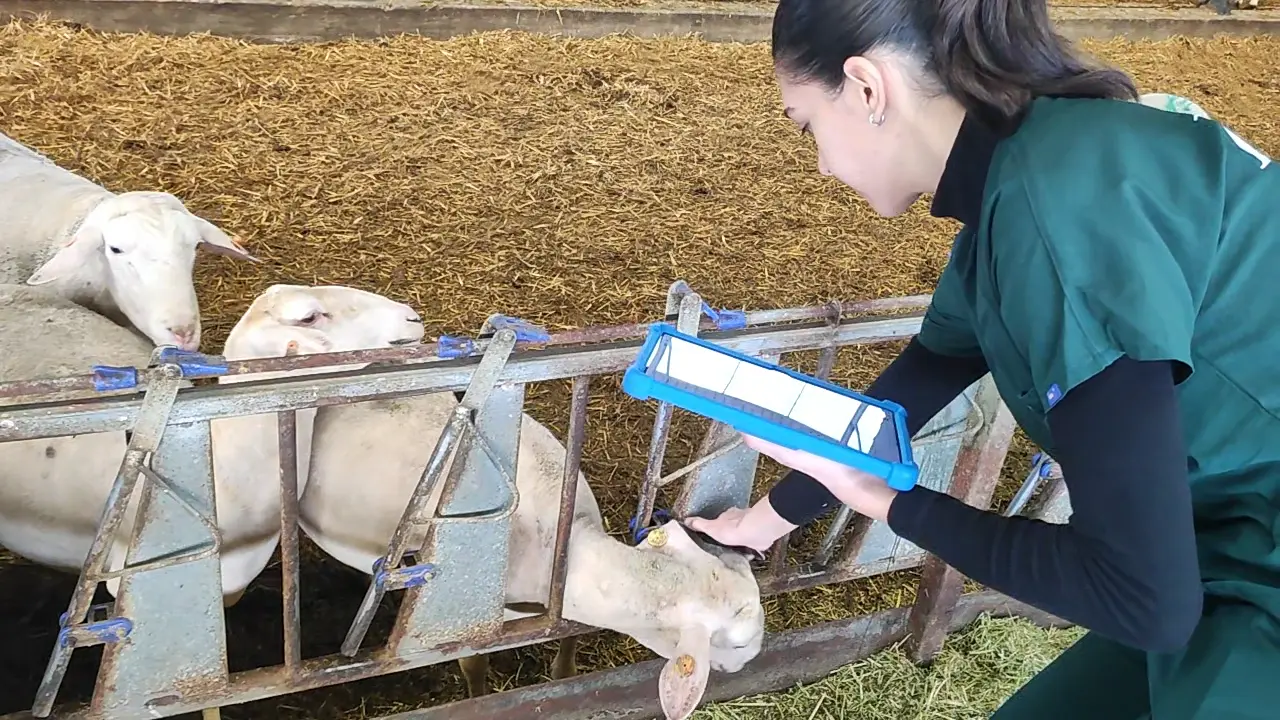
RFID ear tags form the digital backbone of herd management through their unique identification and contactless reading capabilities. With stick-type or phone-form RFID handheld readers, instant and error-free animal identification is possible at any point in the operation.
Cattle Herd Management
1. Heat Detection
In traditional operations, heat detection relies on visual observation — a method that is both time-consuming and prone to error. Electronic collars, RFID ear tags, and bolus devices continuously collect temperature and movement data, transmitting it in real time to cattle herd management software (e.g. Roswise Herd Management).
How it works:
- When collected data deviates from the normal curve, the system generates an alert
- The animal is automatically flagged as potentially in heat or unwell
- The veterinarian makes the final decision based on the data
Efficient heat detection directly impacts annual conception rates and, as a result, the overall profitability of the operation.
2. Breeding Tracking and Success Analysis
When coordinated with heat detection cycles, artificial insemination in cattle operations can achieve up to 99% accuracy in producing calves with the desired genetic traits. However, conception is never guaranteed at 100%, making relational data tracking essential.
Parameters trackable with herd management software:
| Parameter | Description |
|---|---|
| Semen type | Which genetic material was used |
| Insemination date | When the procedure was carried out |
| Conception rate | Percentage of successful pregnancies |
| Veterinarian | Who performed the insemination |
| Calf tracking | Birth weight, sex, health status |
Tracking these parameters relationally makes it easier to identify the root causes of failed inseminations and take corrective action.
3. Birth Cycle Management
Under suitable conditions, a cow is ready to re-enter the breeding cycle approximately 2 months after calving. Missing this window has a direct cost for the operation.
With herd management software:
- Each animal's last calving date is visible at a glance
- Individual or group breeding plans can be scheduled
- Open animals are identified early before losses accumulate
4. Calf Survival Rate
Calf survival depends on a wide range of variables: colostrum quality and quantity, birth weight, whether the dam is a heifer or a cow, semen type, and bull genetics. Herd management software analyzes these parameters retrospectively and relationally, enabling producers to shape future management decisions based on actual outcomes.
5. Milk Production Tracking
Individual milk production tracking is a direct indicator of per-animal productivity, labor efficiency, and overall farm profitability. Herd management software provides real-time, animal-level production data.
6. Live Weight Gain Tracking (Feedlot Operations)
Even among animals of the same breed and age group, live weight gain can vary significantly. Genetics, sex, age, and ration composition are the primary drivers of this variation.
Average daily live weight gain in cattle feedlot operations:
- Beef breeds: 0.8 – 1.6 kg/day
- Dairy breed / cull cattle: 0.6 – 1.2 kg/day
- Heifer: 0.6 – 1.0 kg/day
By identifying animals with the highest feed conversion ratios through herd management software, producers can selectively breed for higher efficiency and improve overall herd performance over time.
Small Ruminant Herd Management
1. Birth Cycle Management and Open Animal Detection
In flocks of 200 or more sheep or goats, some animals inevitably miss conception when ram or buck mating is carried out without systematic tracking. Because pregnancy cannot be confirmed until some time after mating, it is very difficult to verify that every animal in the flock has gone through the expected annual breeding cycle.
The cost of an open small ruminant to the operation:
- Zero milk contribution
- Zero lamb or kid contribution
- Feed, space, and labor costs continue regardless
Herd management software flags these animals early, preventing unnecessary losses from compounding over time.
2. Litter Size (Prolificacy) Tracking
Each breed has a genetically and environmentally determined expected litter size. Herd management software compares measured rates against scientific reference values, enabling producers to adjust nutrition and management practices accordingly.
| Breed | Expected Litter Size |
|---|---|
| Merino | 1.2 – 1.5 |
| Kivircik | 1.1 – 1.3 |
| Ile de France | 1.8 – 2.2 |
| Lacaune | 1.5 – 2.2 |
| Assaf | 1.6 – 1.9 |
3. Lamb and Kid Survival Rate
Neonatal mortality — especially during the first 7–14 days of life — is influenced by both the genetic traits inherited from the sire and the dam's colostrum quality, milk production, and maternal instinct.
Parameters trackable with herd management software:
- Survival rate by sire
- Birth weight and daily live weight gain
- Dam's colostrum quality and quantity
- Maternal instinct scoring
By identifying the most and least productive animals through this data, producers can apply selection pressure to steadily improve overall flock performance.
4. Live Weight Gain Tracking (Small Ruminant Feedlot)
In small ruminant feedlot operations, daily live weight gain ranges from 100 to 450 grams. This wide range is shaped by breed, sex, age, and whether the operation is pasture-based or confined.
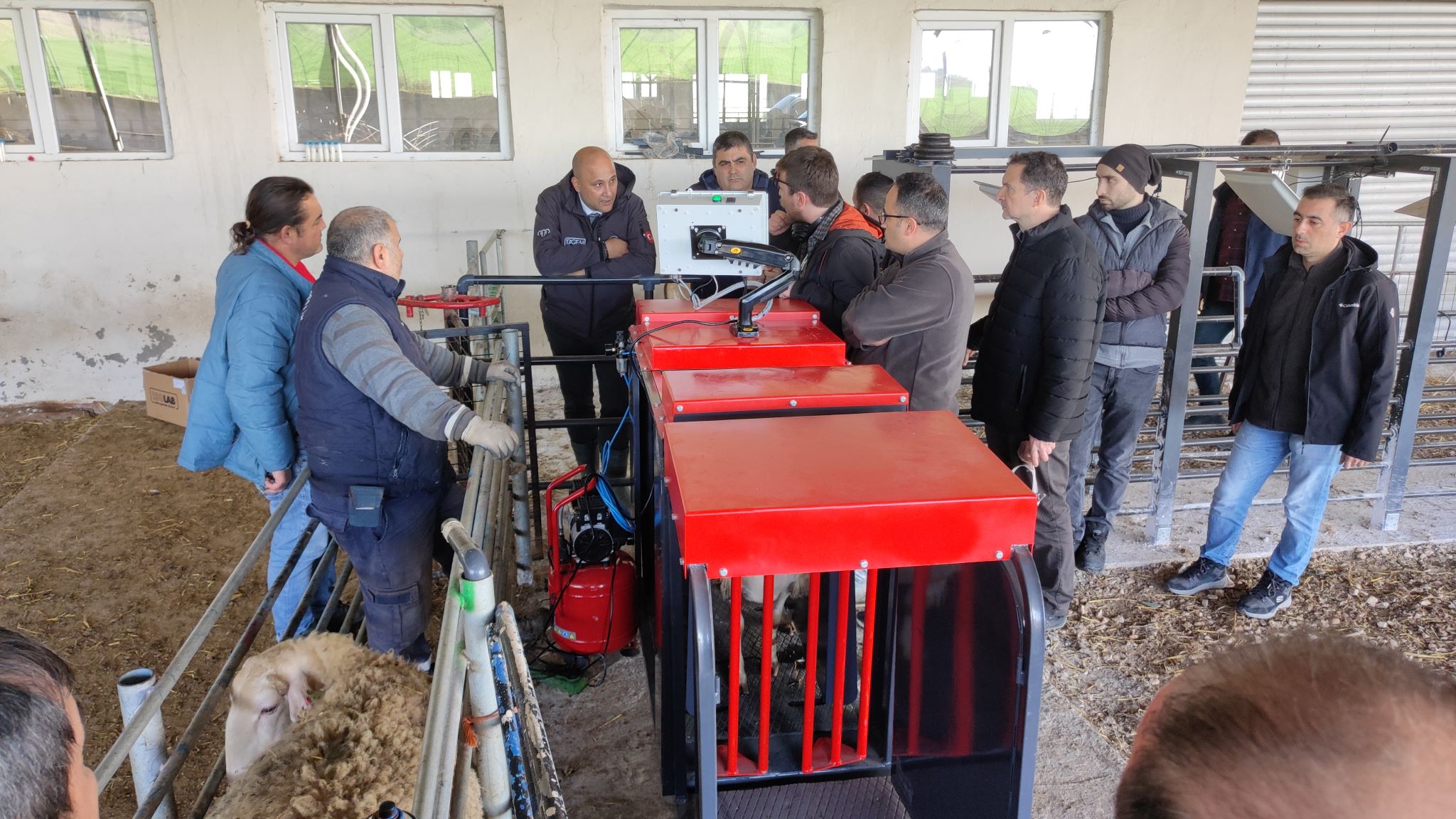
roswise Herd Management Software's (roswise ovinia & roswise bovix) automatic and semi-automatic weighing devices allow weight data to be collected and analyzed quickly and with minimal labor.
Summary: The Benefits of Digital Herd Management System
| Benefit | Description |
|---|---|
| Cost reduction | Open animals are detected early, eliminating unnecessary expenses |
| Higher productivity | Breeding cycles, insemination, and milk output are optimized |
| Genetic selection | The most productive animals are identified through data, not guesswork |
| Full traceability | All parameters are queryable retrospectively and relationally |
| Time savings | RFID reading enables instant, error-free data collection at scale |
Related products: Scaleep Basic Weighing Integrator · Scaleep Pro Fully Automatic Weighing Machine